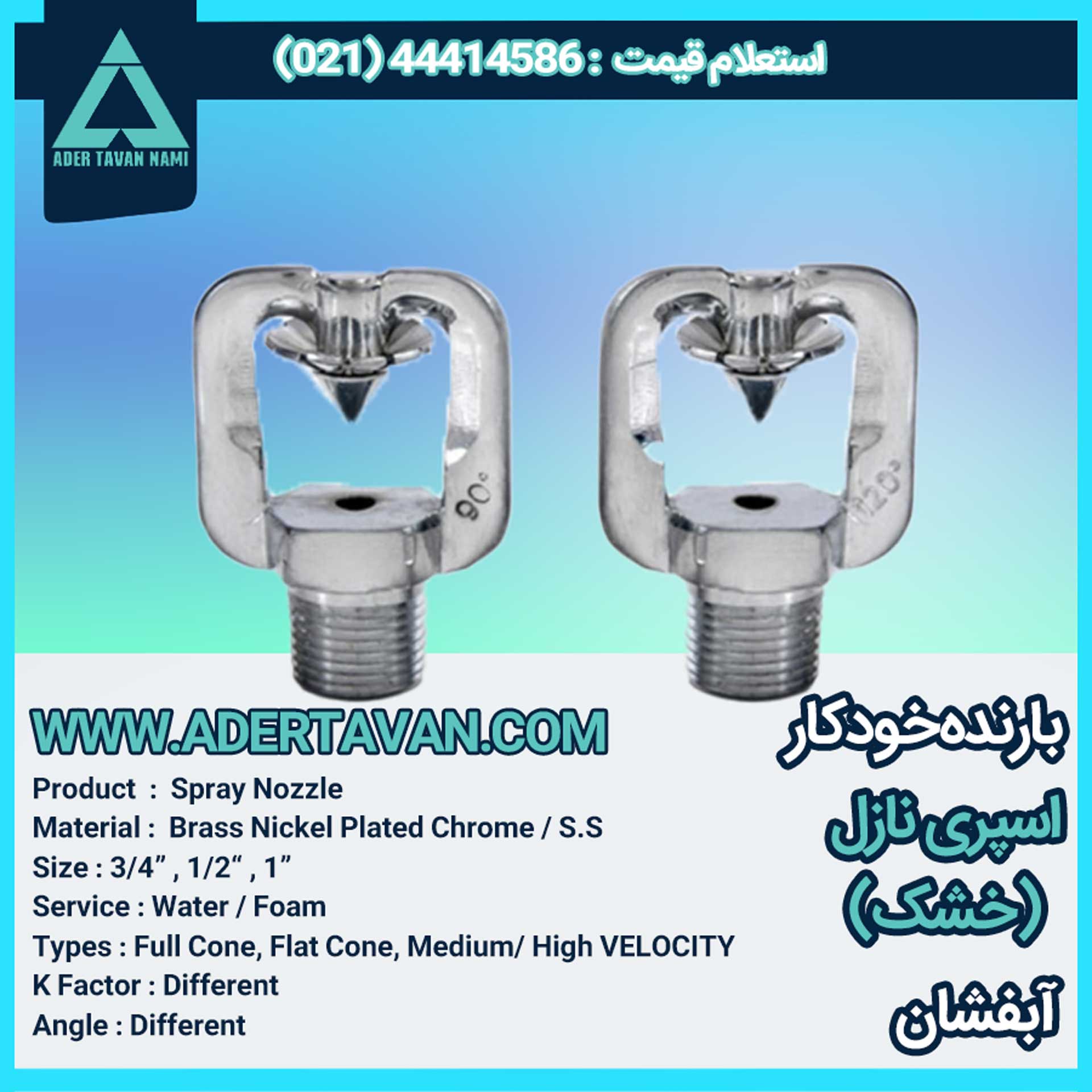

A Fire Spray Nozzle for Sprinkler Systems / Spray Nozzle is a key component of water-based and foam fire suppression networks, used alongside sprinklers wherever a wider or more controlled discharge pattern is required than a standard sprinkler head provides. Unlike a sprinkler, which is triggered by its own heat-sensitive element, this type of spray nozzle is typically an open-orifice device that discharges as soon as water or foam solution reaches it — commonly through a deluge or pre-action valve — making it the preferred choice for high-hazard areas needing simultaneous, full-area coverage.
Ader Tavan Nami manufactures this product in brass with nickel-plated chrome finish or stainless steel (S.S), in 1/2″, 3/4″, and 1″ sizes, suitable for both water and foam service. Depending on the spray pattern required — Full Cone, Flat Cone, or Medium/High Velocity — the nozzle’s K-Factor and discharge angle are selected to match the hazard, from cooling and dust suppression to full flooding fire protection.
This spray nozzle for sprinkler systems is commonly paired with deluge valve systems, foam systems, and monitors in high-hazard installations such as fuel storage tanks, chemical plants, and paint booths, where rapid full-area discharge is critical. All Ader Tavan Nami products come with a 1-year warranty and 10 years of after-sales service, with a traceable warranty code available on our website.