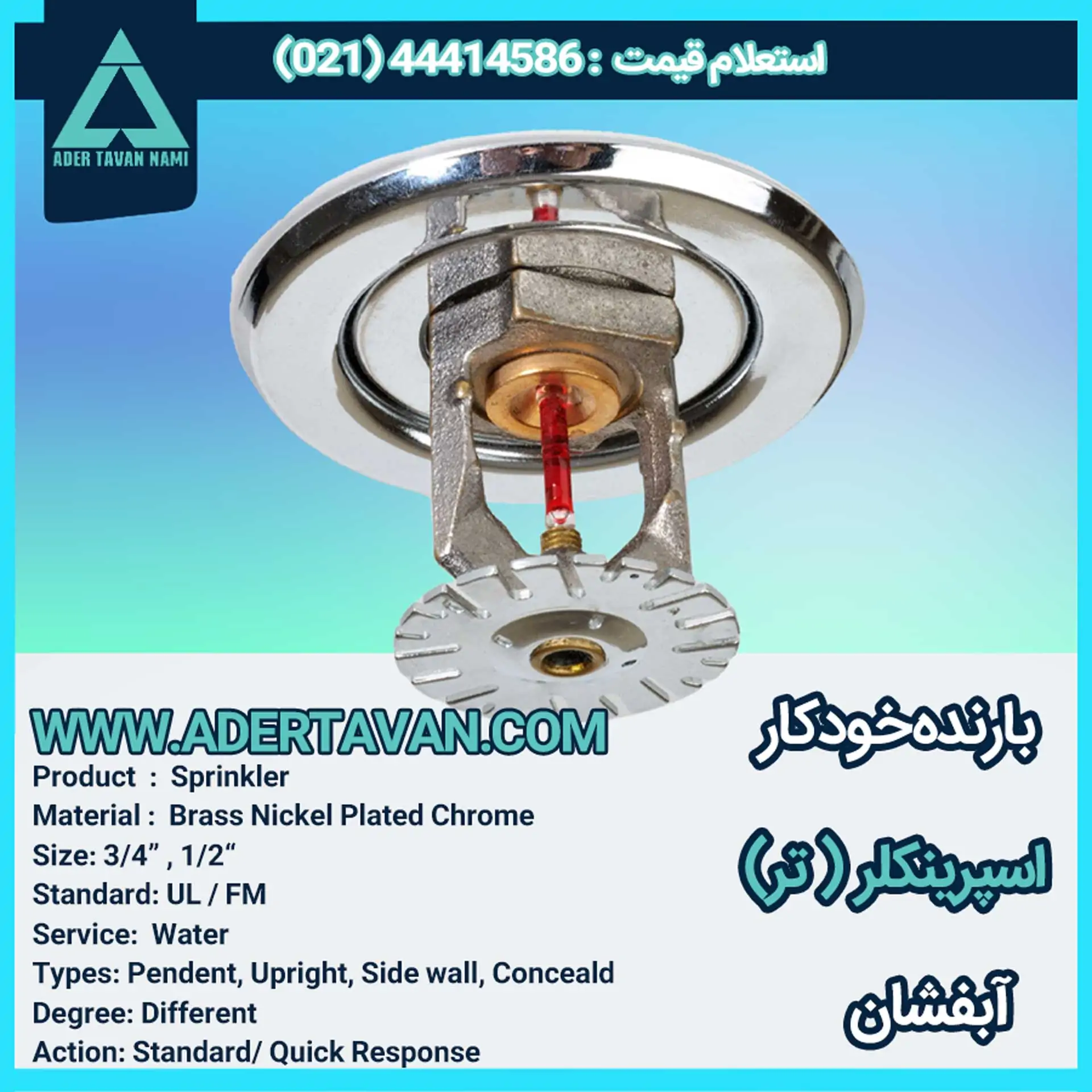


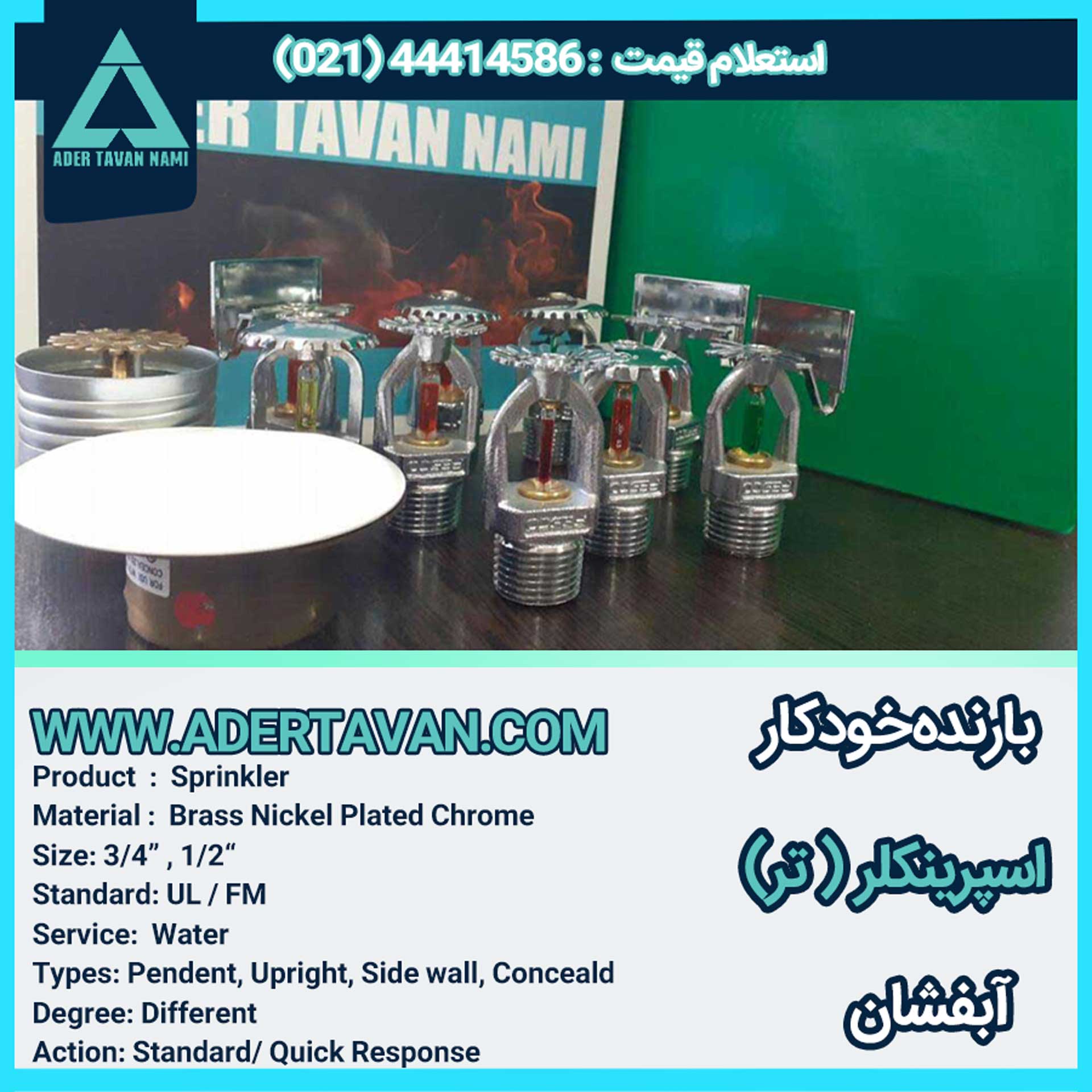
Sprinklers are the individual water-discharge components installed at the end of a sprinkler system’s piping network the part that actually senses heat and releases water at the point of fire, as opposed to the piping, valves, and control equipment covered by the wider sprinkler system. Each sprinkler head is sealed by a heat-sensitive glass bulb or a fusible metal link that holds back water pressure until it reaches the head’s rated activation temperature, at which point it opens and discharges independently of any other head on the line so only the sprinklers nearest the fire activate, limiting water damage to unaffected areas.
Ader Tavan Nami manufactures these sprinklers in brass with nickel-plated chrome finish, in 3/4″ and 1/2″ sizes, certified to UL/FM standards for water service. They are available in Pendent, Upright, Side Wall, and Concealed types, with different activation degrees and both Standard and Quick Response action, so the right sprinkler can be matched to ceiling height, room use, and hazard class.
Sprinklers are the core protective element of any wet, dry, or pre-action sprinkler network, used across residential, commercial, and industrial buildings alike from offices and hotels to warehouses and production halls with the head type and response speed selected according to the occupancy and fire risk of each space.