
Cable tray
A complete cable routing system usually needs more than a single length of tray. Cable tray fittings from horizontal and vertical elbows to tees, reducers, brackets and cover clamps , each play a specific role depending on the length of the route, the number of turns, and how densely packed the cables are.
In the following, we walk through what each of these cable tray accessories is used for, so choosing the right option for your project becomes easier.




+300 Thousand
Production of safety and Electrical equipment
Ader Tavan Company is a renowned manufacturer and exporter of the best firefighting equipments and electrical equipments.
A complete cable routing system usually needs more than a single length of tray. Cable tray fittings — from horizontal and vertical elbows to tees, reducers, brackets and cover clamps — each play a specific role depending on the length of the route, the number of turns, and how densely packed the cables are.
In the following, we walk through what each of these cable tray accessories is used for, so choosing the right option for your project becomes easier.
What Are Cable Tray Fittings?
This page introduces the full range of cable tray fittings and accessories manufactured by Ader Tavan Nami. Cable trays can be looked at from two angles: by material and coating (steel, stainless steel, aluminum, galvanized) — covered in full on our Cable Tray product page — and by the role each fitting plays along the cabling route, which is what this page focuses on.
To complete a cabling route, a single cable tray is rarely enough. Depending on the shape of the route, the length of the project, and cable density, you'll typically need a combination of cable tray fittings and accessories. Ader Tavan Nami manufactures this entire product family in-house, so your cabling route can be completed from a single supplier.
Below is the most complete list of cable tray fittings and accessories, along with what each one is used for.
Cable Tray Fittings by Role in the Route — Quick Selection Guide
| Your Project Need | Recommended Type of Cable Tray / Fitting |
|---|---|
| Straight run / base of the cabling route | Cable Tray |
| Horizontal direction change (turning at the same level) | Cable Tray Horizontal Elbow |
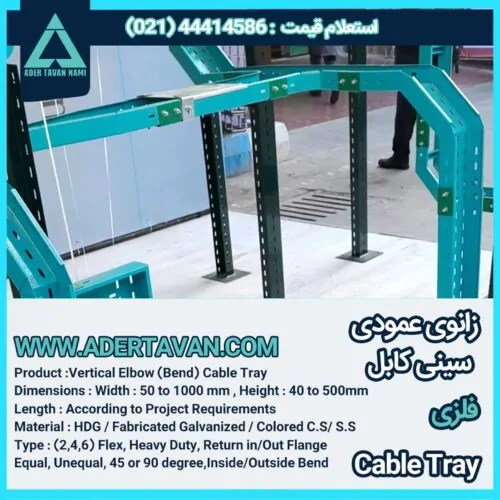
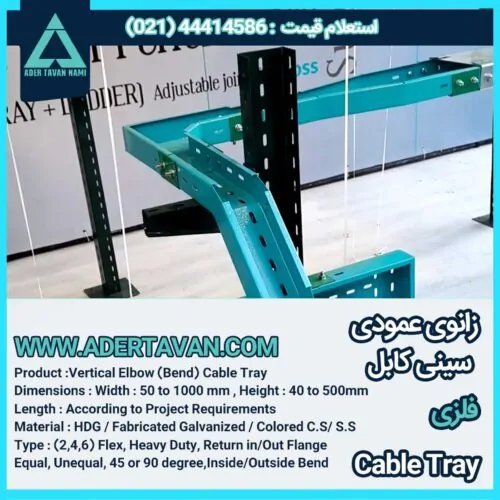
| Vertical direction change (going up or down) | Cable Tray Vertical Elbow |
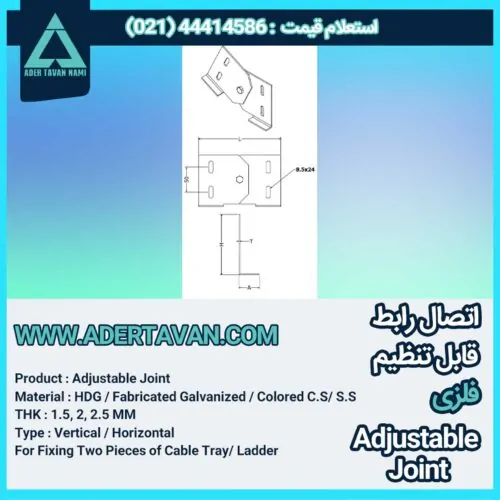
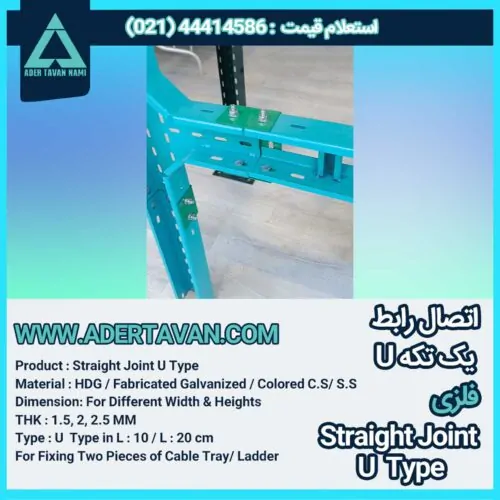
| Joining two tray sections on long runs | Cable Tray Joint |
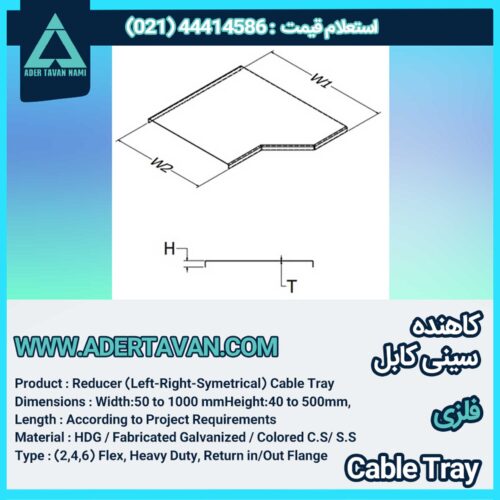
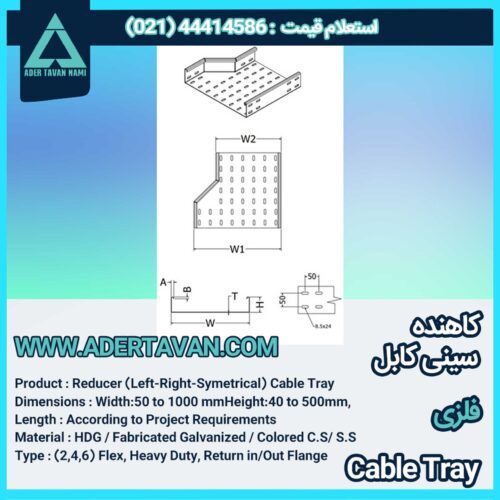
| Reducing route width without manual cutting | Cable Tray Reducer |
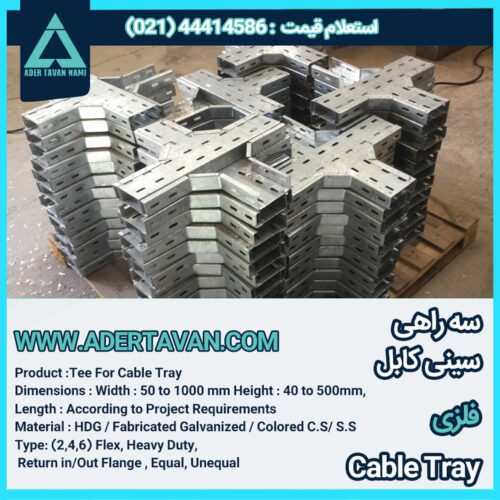
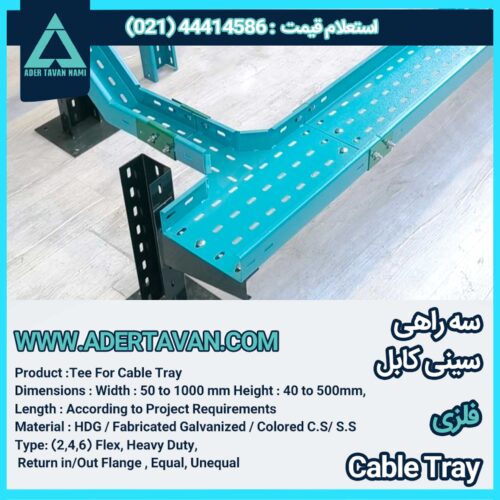
| Branching the route in three directions | Tee For Cable Tray |
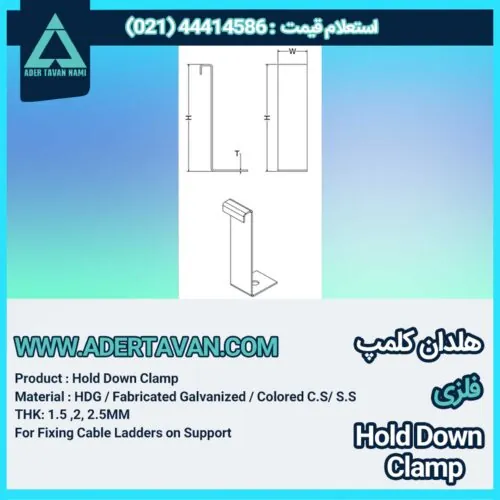
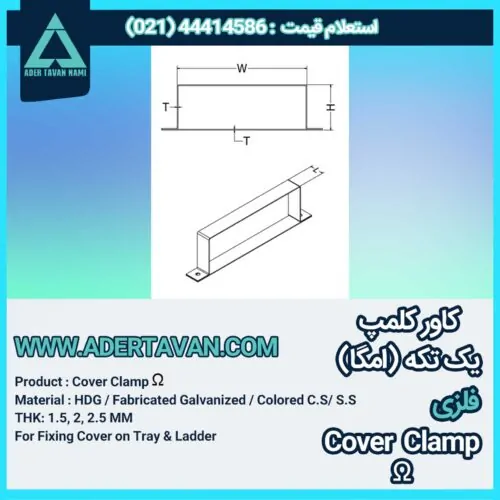
| Covering and protecting the tray | Tray Cover Clamp |
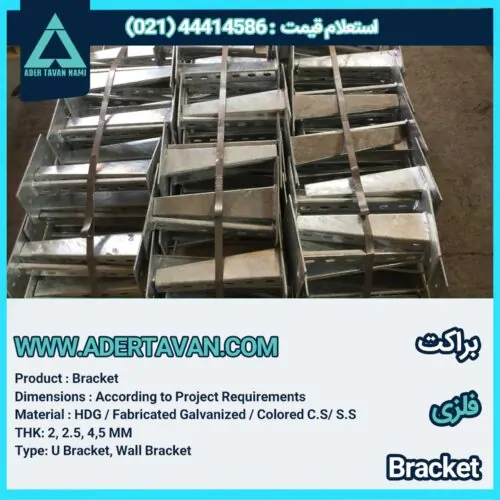
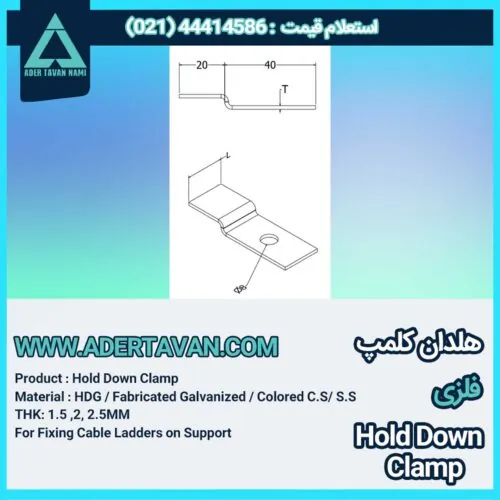
| Securing and supporting the tray on a wall or ceiling | Bracket |
Cable Tray Accessories by Project Environment :
Choosing between cable tray fittings doesn't only depend on the shape of the route the project environment plays a decisive role too:
| Environment / Project Type | Main Cabling Challenge | Recommended Cable Tray Type |
|---|---|---|
| Factories and industrial environments | Long runs, frequent servicing or replacement | Cable Tray + Cable Tray Joint |
| Office and commercial buildings (false ceilings) | Cables need to be neatly concealed | Cable Tray + Tray Cover Clamp |
| Routes crossing floors or vertical shafts | Vertical direction change in the route | Cable Tray Vertical Elbow |
| Electrical rooms and distribution panels with multiple outlets | Branching to several directions at once | Tee For Cable Tray |
| Open outdoor environments (parking lots, industrial yards) | Wall or structure mounting with no ceiling | Bracket |
| High cable-density projects | Gradual width reduction at the end of the run | Cable Tray Reducer |
How to Choose the Right Cable Tray Fitting
Picking the right cable tray fitting usually comes down to three simple questions:
1. Is your cabling route straight, or does it need to change direction? For straight runs, a standard cable tray is enough. As soon as the route needs to turn or move between floors, horizontal or vertical elbows come into play.
2. How long is the project, and how many tray sections need to be joined? Trays are typically manufactured in standard 2- and 3-meter lengths; for longer projects, joints play a key role in the strength and continuity of the entire route.
3. Does the route width stay constant throughout the project? If the number of cables decreases at some point along the route, using a reducer — instead of manually cutting the tray — saves both cost and installation quality.
If you're unsure which cable tray fittings your project needs, Ader Tavan Nami's technical team can review your project drawings and prepare an exact parts list for you.
For details on cable trays by material and coating (steel, stainless steel, aluminum, cold- and hot-dip galvanized), see our Cable Tray product page.
Reference Standards
Ader Tavan Nami's cable tray fittings are manufactured in accordance with the Iranian National Standards Organization's requirements and the relevant international reference standards, ensuring both dimensional accuracy and mechanical strength for your cabling route.
Why Ader Tavan Nami?
- All cable tray fittings and accessories manufactured under one roof — no need to source from multiple suppliers
- Custom dimensions available, tailored to your project drawings
- 1-year warranty and 10 years of after-sales service, with an online-verifiable warranty code
Ader Tavan Company is a renowned manufacturer and exporter of the best firefighting equipments and electrical equipments.
We have proudly been the choice of the best for more than 15 years!
No matter which industry you are involved in,
safety is essential!
As a token of appreciation to our valued customers and to guarantee product quality, all Ader Tavan Nami products come with 1-year warranty, 10 years of aftersales service and also traceable warranty code available on our website.


