Cable tray cover clamps are typically manufactured from factory-galvanized or hot-dip galvanized steel sheets. Thanks to their resistance to rust, moisture, and high-humidity environments, they’re a strong choice for cable routing systems in industrial plants, oil and gas, petrochemical, power plant, and pharmaceutical/chemical facilities.
At Ader Tavan Nami, a manufacturer of electrical equipment, fully automatic, up-to-date CNC machines are used for punching holes in these fittings, while a semi-automatic bending machine shapes the clamp bodies.
These cover fasteners are produced using hot-dip or cold-galvanized sheets, with thicknesses ranging from 1.5 mm to 2.5 mm depending on the client’s requirements.
As a manufacturer of custom tray cover clamps in various sizes and thicknesses, Ader Tavan Nami can produce these fittings in different dimensions and according to the client’s custom drawings.
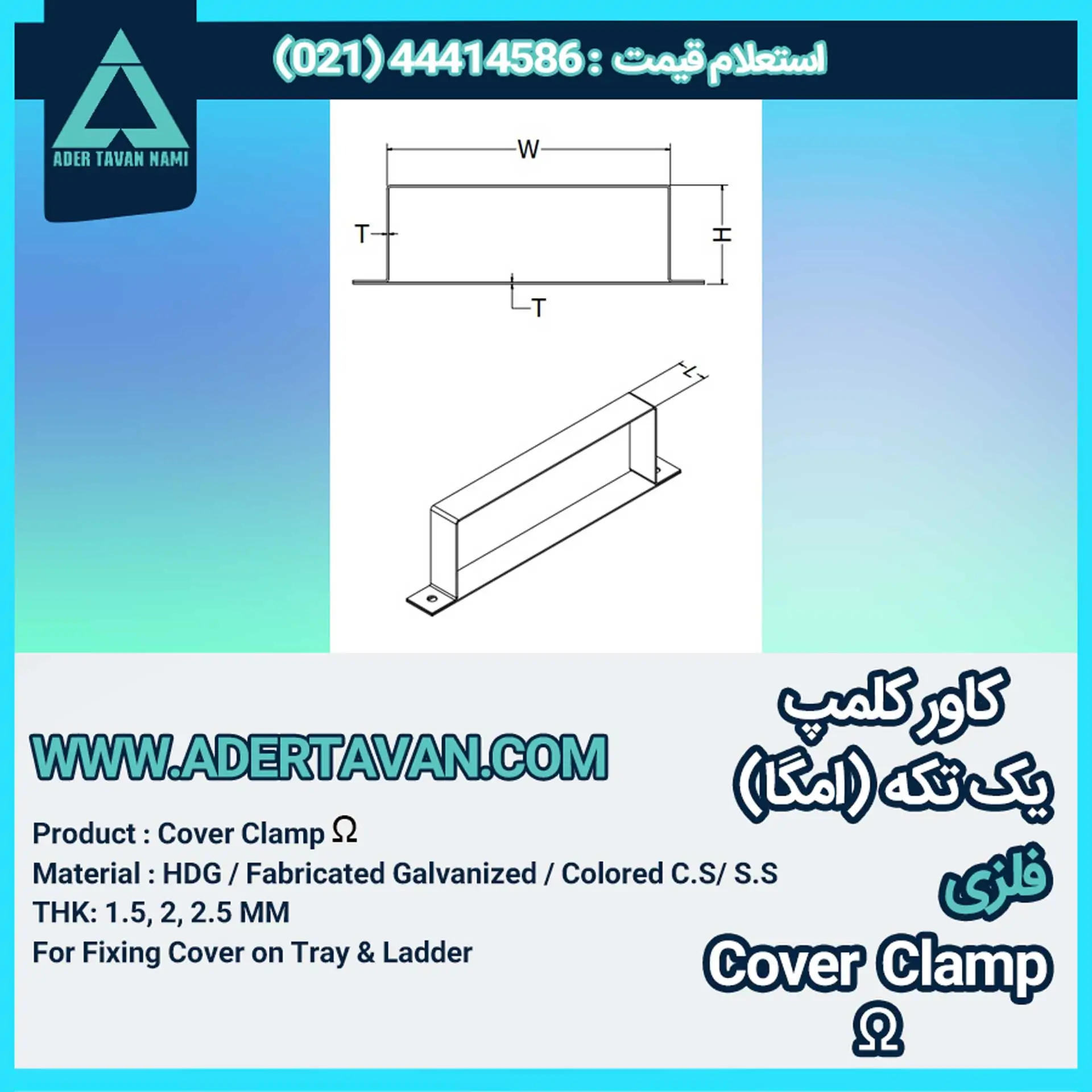
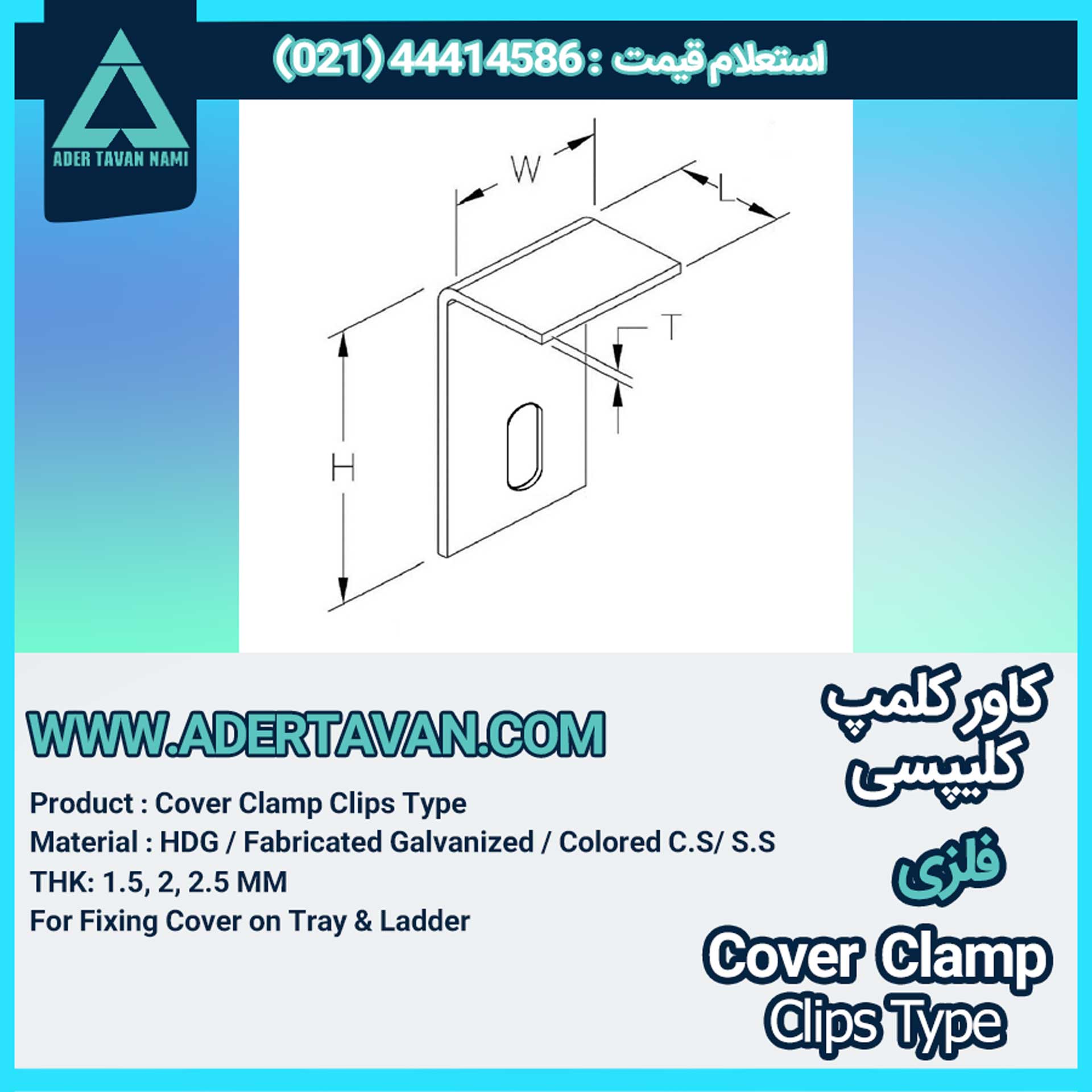
Depending on customer needs, they are produced for trays with widths of 5, 10, 15, 20, 25, 30, 40, 50, and 60 cm, heights of 4, 5, 6, 8, 10, and 15 cm, and lengths of 10 and 15 cm. The sizes above are examples of common orders — if the client requires custom dimensions, those exact dimensions will be produced.
Reducing Costs
To reduce purchase costs, it’s common to choose a cover retaining clamp made from a thinner sheet than the tray itself. For example, when ordering a 50 cm wide, 2 mm thick galvanized cable tray, the clamp can be selected in 1.5 mm thickness.
Important Factors When Choosing This Fitting
- Width of the galvanized cable tray (cm or mm)
- Height of the cable tray (cm or mm)
- Thickness of the tray sheet
- Thickness of the clamp sheet
- Whether the tray is perforated or non-perforated
- Type of galvanization — cold or hot-dip
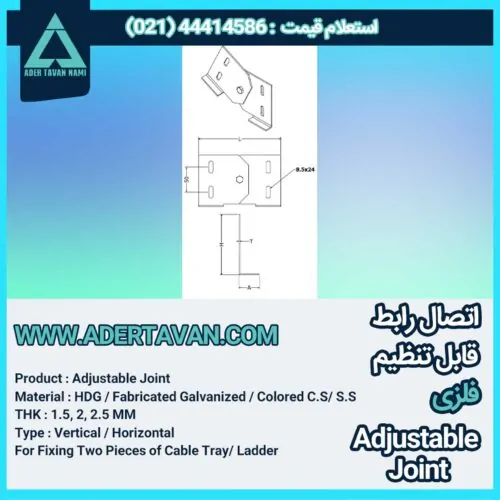
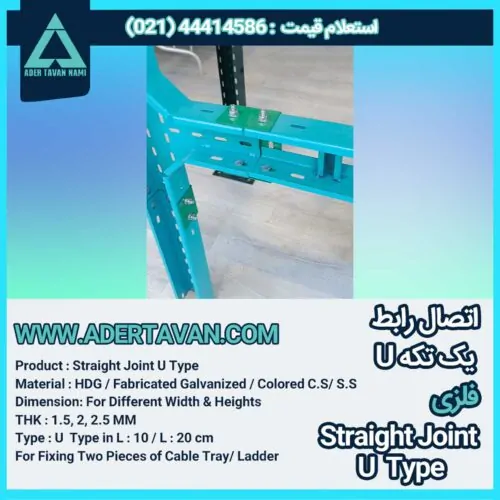
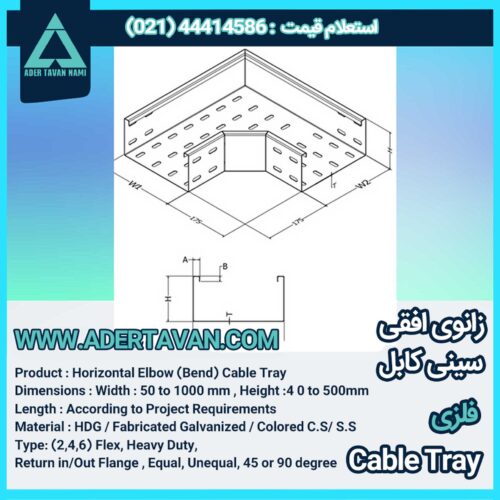
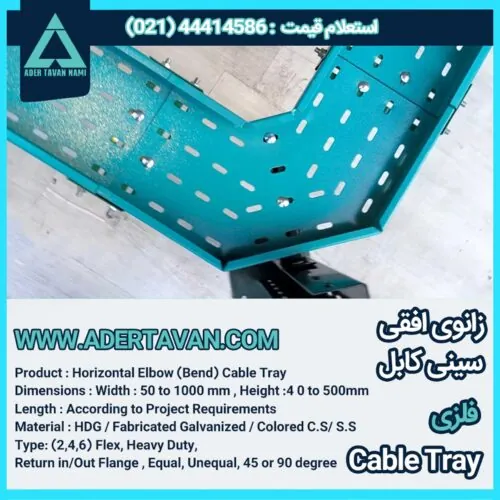
For connecting galvanized cable trays to each other and routing cables, various fittings are required, some of which are mentioned below. Wall supports and ceiling hangers are also used to mount galvanized cable trays to ceilings or walls.
Related Fittings
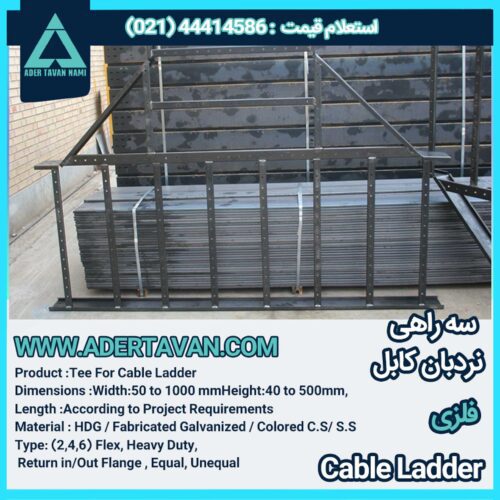
Among the most important and widely used fittings alongside the cable tray cover clamp are: internal tray elbows, external tray elbows, tray tees, tray crosses, tray couplers/joints, tray reducers, tray-to-ladder transitions, and mushroom-head bolts and nuts.
How Does It Work?
As the name suggests, a clamp acts as a gripping or holding device. When using a cable tray cover, this fastener must be used to secure the cover onto the tray. Without it, tray covers may separate from the tray surface due to the stresses and pressures common in industrial environments.
In such conditions, power cables become easily vulnerable. Installing this fitting prevents the covers from coming loose under any circumstances and keeps dust and debris from entering the tray due to a dislodged cover.
It can also be thought of as a connecting fastener or supporting component for the cable tray. The spacing between installed units depends on the length of the trays used in the structure. However, the holding strength is high enough that they can be installed at fairly wide intervals from one another.
The force this fitting exerts on the grooves in the tray cover keeps the cover stable, and small connecting hardware such as bolts and nuts is typically used for installation.
Why This Fitting Is Necessary for Proper Equipment Support
Tray covers cannot be properly used without a cable tray cover clamp — especially when the trays are installed outdoors, since even a small impact can dislodge the covers. As you know, covers are fully galvanized metal sheets that sit on top of the cable tray as a lid.
There are many benefits to using covers, including preventing dust from entering the tray enclosure and preventing moisture penetration into the tray.
In outdoor industrial settings, covers also block direct sunlight exposure to the cables, which helps extend the cables’ lifespan and improve their performance. If you intend to use your electrical equipment — including cables and cable trays — over the long term, installing tray covers along with a proper cover clamp is essential.
Although the edges of tray covers are designed with grooves that help stabilize the cover on the tray bed to some extent, for maximum stability the only component that can truly secure the cover in place is this dedicated clamp.
Easy Installation and Removal
There are various reasons you might need to remove covers from a cable tray — you may want to make major changes to your cable routing, or increase/decrease the cable volume.
In some cases, technical defects may occur in the cables, requiring you to open the clamp and remove the cover to directly access the cables and their connections. Installing and removing it is not a difficult or time-consuming process.
You can remove it at any time. As mentioned, connections are completed using bolts and nuts, and the design allows for quick installation and removal from the tray surface.
These fittings are small components that are easy to install on cable tray covers. However, you must make sure they’re securely tightened — since the grooves in some base-shaped clamp designs can come loose from the cover surface if the nuts aren’t properly tightened. Given how frequently these components are used, ensuring proper tightening is extremely important.
Size Matching Between Clamp and Tray
You cannot use just any size on covers and cable trays of different widths and thicknesses. As mentioned, cable trays vary in width and thickness, which means the covers and matching clamps also come in different sizes.
Given its shape and how it needs to fully and securely hold the cover in place, the clamp must be properly matched in size with both the cover and the tray. Failing to pay attention to correct sizing when purchasing can result in the fitting not fitting properly onto the trays during project execution, effectively rendering it useless.
For this reason, we always recommend keeping your cable tray’s exact dimensions in mind when purchasing the appropriate size. In some cases, you may also need reducer fittings to connect two cable trays of different sizes.
In other words, a single project typically doesn’t use just one tray size — you may use several tray widths. In that case, you’ll need clamps in different sizes for the same project. Just as small clamps won’t fit large trays, large clamps won’t fit small trays either.
That said, this also depends on the design. Clamps that require size-matching with the tray are typically U-shaped in appearance, with a completely flat, elongated cross-section.
If you’re planning to equip a site with electrical equipment and don’t have sufficient technical expertise in this area, we recommend contacting our professional consultants via the phone numbers listed on the website or through WhatsApp for free consultation.