



Support System Brackets
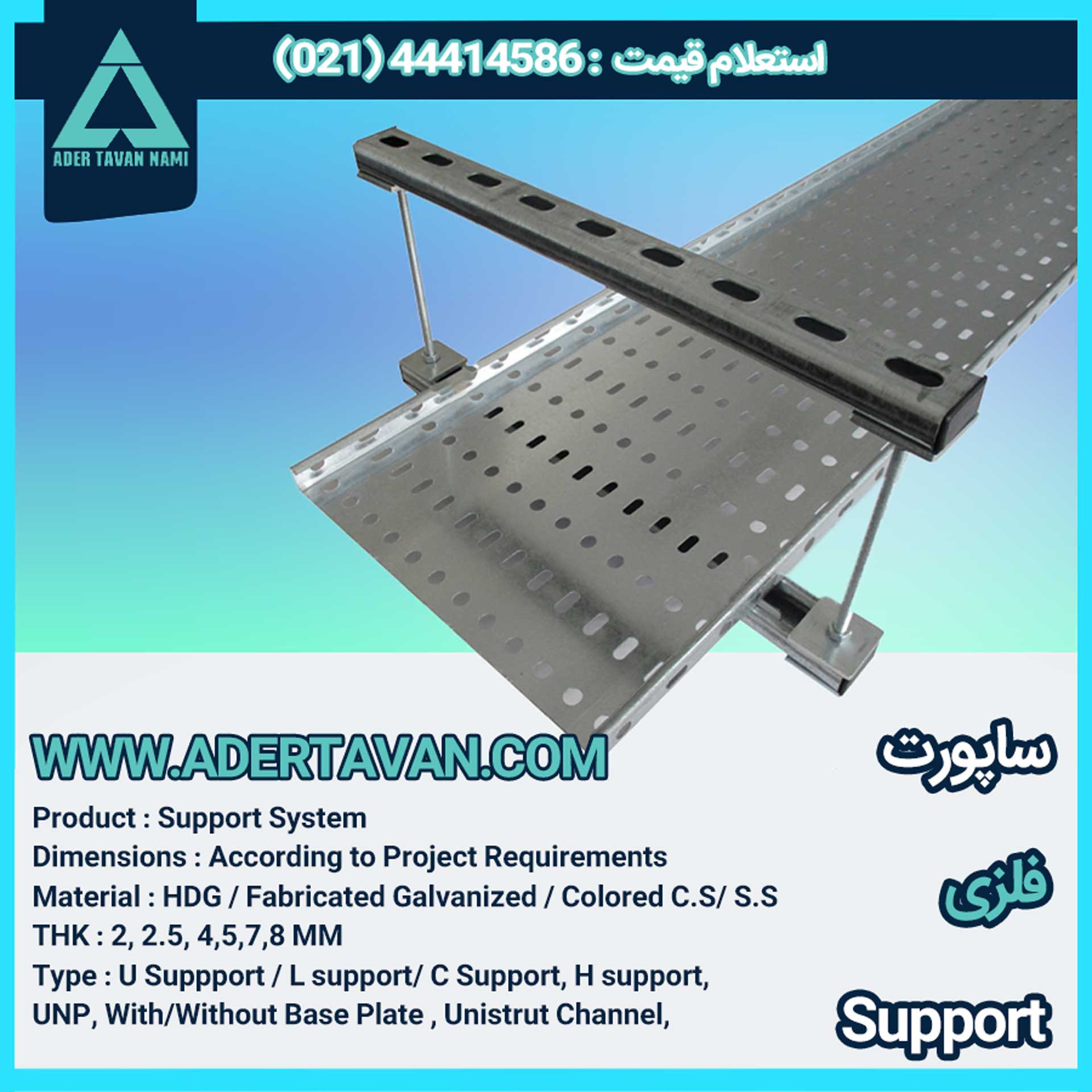
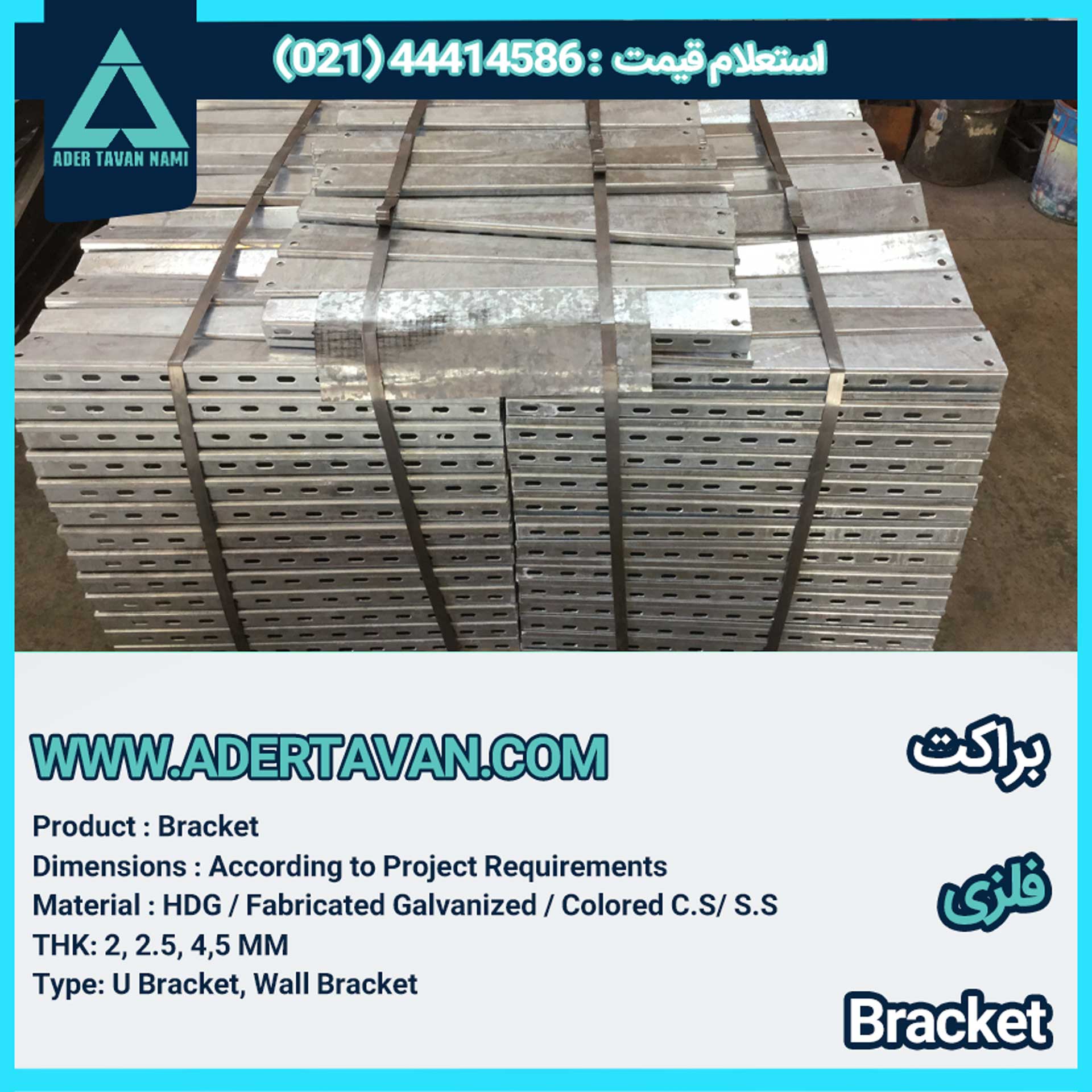
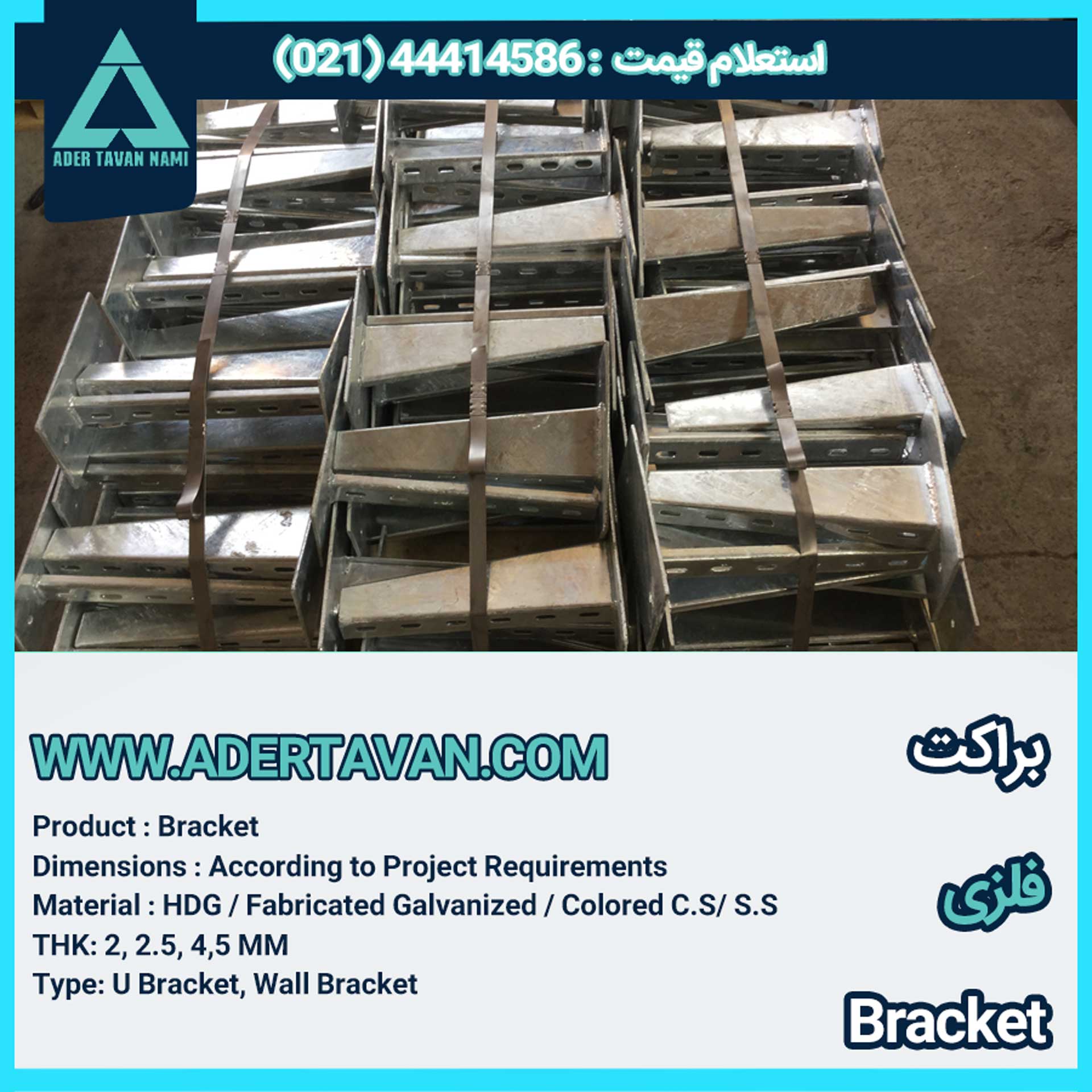
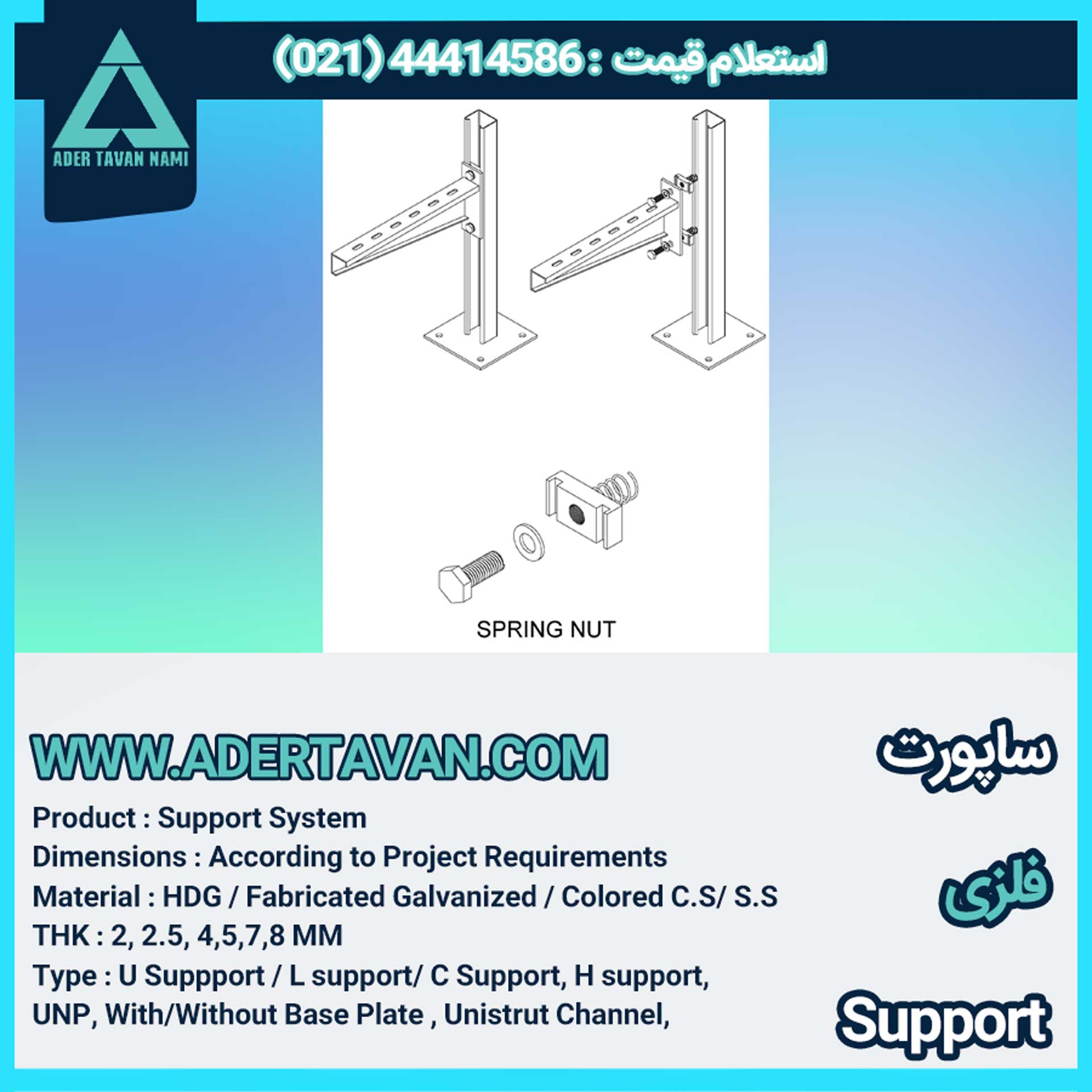
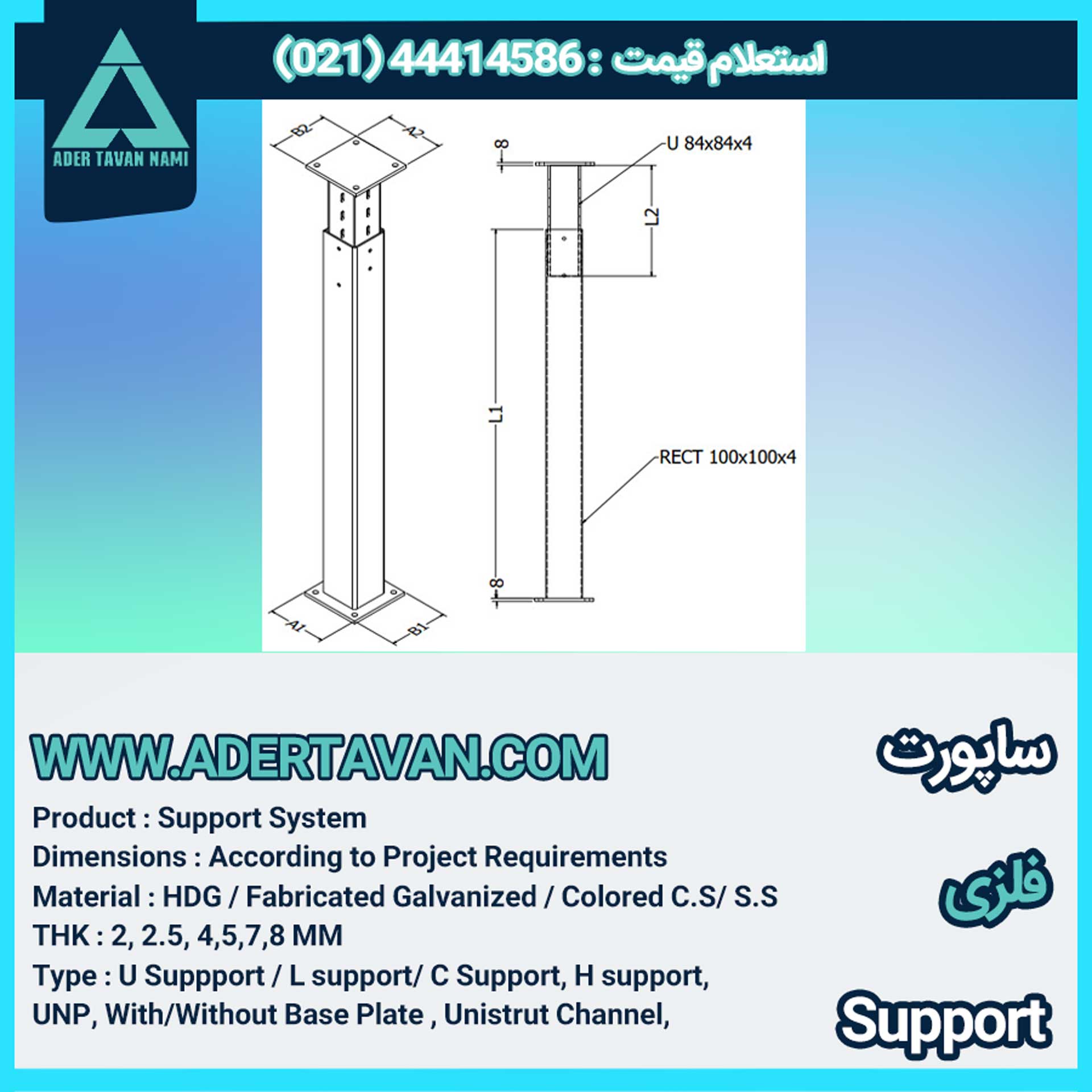
Ader Tavan Nami manufactures support system brackets also known as cable support brackets including U Brackets and Wall Brackets used to mount and secure cable trays, cable ladders, piping, and ductwork onto walls, ceilings, and structural steelwork.
These brackets are produced in three standard thicknesses (2, 2.5, and 4.5 mm) to match different load requirements, from lightweight cable routes to heavy-duty industrial installations. Sizing is fully customizable according to project drawings.
Bracket Types
- U Bracket: A U-shaped profile that cradles the cable tray or ladder from below, suitable for straight overhead or wall-mounted runs.
- Wall Bracket: A cantilevered profile fixed directly to a vertical wall, ideal for routes that run alongside a wall rather than overhead.
Material and Coating Options
Support system bracket are available in hot-dip galvanized (HDG) steel, fabricated galvanized steel, colored carbon steel (C.S), and stainless steel (S.S) — selected based on the corrosion resistance and appearance needs of your installation environment.
For guidance on which bracket type and material fits your project’s environment (indoor, outdoor, corrosive, or high-load), see our Support Systems guide.