


Cable Tray Joint / Cable Ladder Joint / L-Angle Side Joint Connector / Adjustable Joint Connector
The adjustable joint connector is one of the important and widely used components in wire and cable management systems. Joints are used to connect two cable trays that are aligned along a straight run. Today, with advancing technology and the growing need for cable usage, cable trays have gained significant attention due to their many features and advantages. This category of fittings and accessories for cable management systems is widely used in both industrial and construction sectors.
Overall, cable trays are now considered an excellent alternative to galvanized or PVC conduit pipes. In addition to offering very high strength and durability, cable tray systems allow free air circulation around wires and cables. As a result, even when high current passes through the wires and cables, heat transfer from the cables to the surrounding air occurs effectively, which increases the service life of the wires and cables.
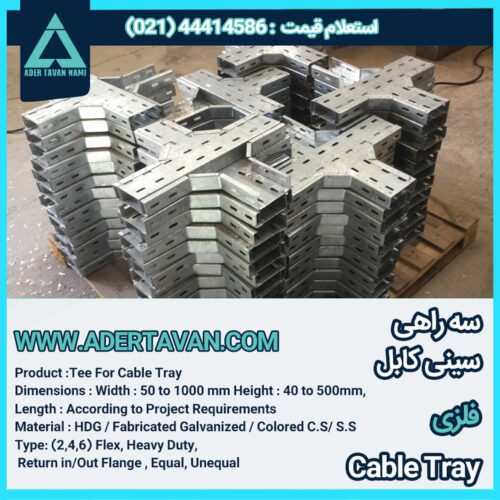
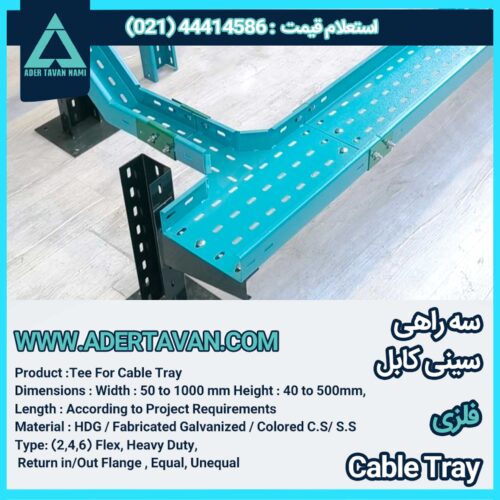
Tray joints, like cable trays themselves, are produced in both solid and perforated (mesh) styles. The joints are made from the same material as the cable trays manufactured by Ader Tavan Nami. These joints are made in standard widths matching the cable trays. To connect trays directly in a straight line without any angle, a Cable Tray Joint is used. Joints are a type of connector placed at the entry and exit ends of tray sections to directly connect them to one another.
Types of Tray Joints
Tray joints are available on the market in several forms: side (angle) joint, straight/U-shaped or base joint, adjustable vertical joint, and adjustable horizontal joint. Each type performs the function of connecting and joining trays, but they differ from one another in terms of function and installation method.
1. Side (Angle) Joint Connector
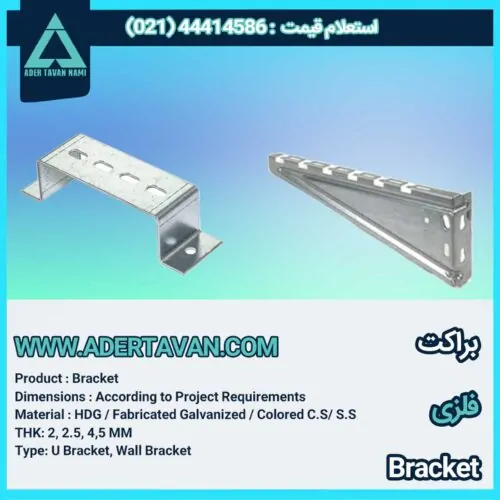
The side joint connector (Joint Connector) for cable trays and cable ladders is used as a pair of angle-shaped pieces. The height of this type of joint depends on the height of the side edges (flanges) of the cable tray or ladder — whatever that height is, the joint is manufactured to match. There are also two holes at each end of the joint, on the sides, for fastening. The side joint connector can be produced in either hot-dip or cold galvanized finish, depending on the tray material.
The side joint connector is used to connect tray or ladder sections to one another. It is manufactured from galvanized sheet in thicknesses of 1 to 2 mm. Side joints are typically produced and sold in lengths of 15, 18, and 20 cm. The height of the side joint must be selected to match the height of the tray’s side edges. Side joints are installed in pairs on both sides of the tray or ladder sections and are fastened together using tray-specific bolts and nuts.
2. Straight (U-Shaped) or Base Joint Connector
It’s worth noting that all cable trays on the market are manufactured according to current international standards and are typically produced in fixed standard lengths and widths. Because of this, a single tray section cannot cover long cable runs on its own. To solve this problem, a straight (Connector) cable tray joint is used.
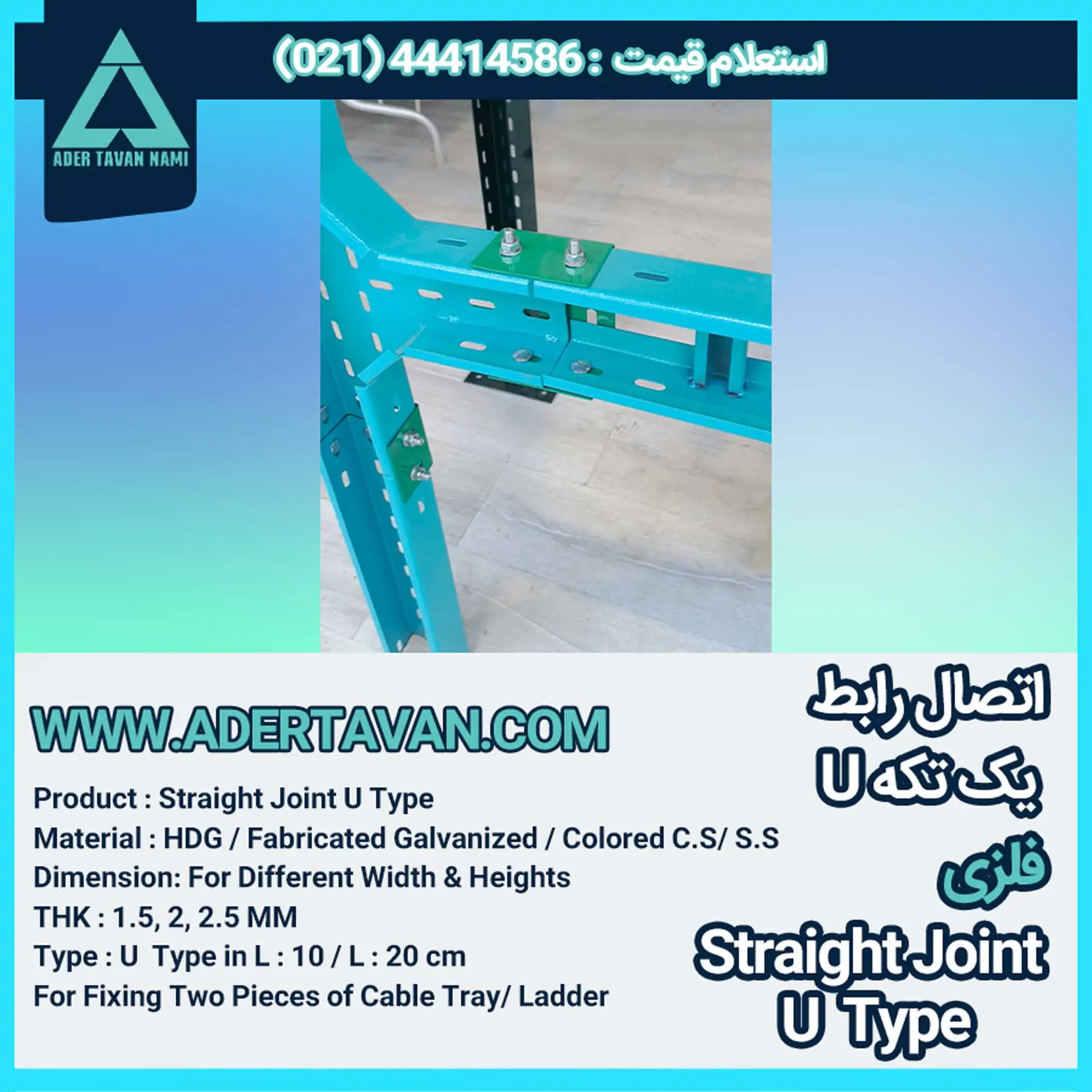
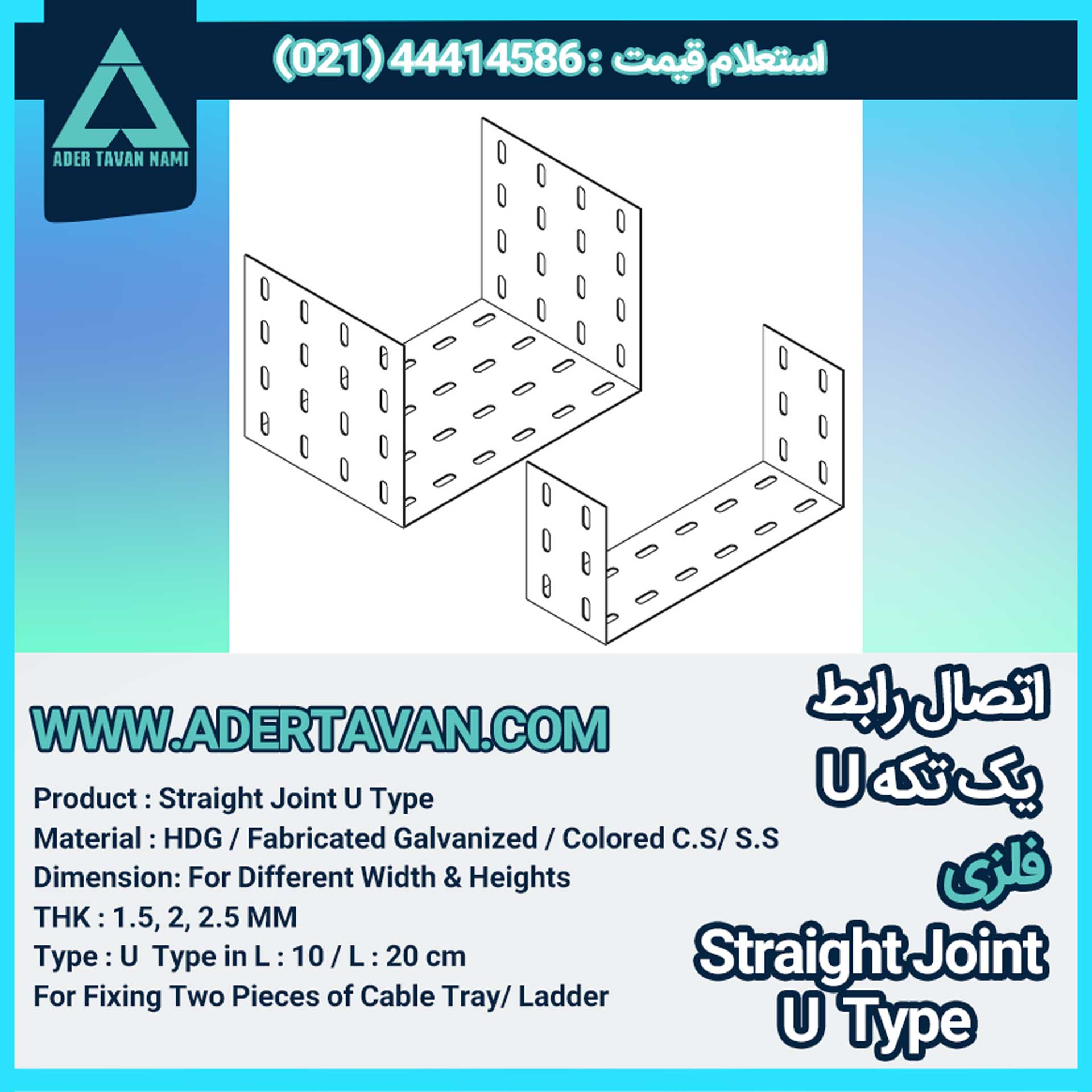
The straight or U-shaped joint is one of the most widely used fittings in cable tray systems. Its function is to connect the entry and exit ends of tray sections to one another so the entire desired route can be covered according to the client’s requirements. This type of joint is also manufactured in standard widths matching the cable trays. The straight joint is placed underneath two tray sections, and the sections are then securely fastened together using tray-specific bolts and nuts.
3. Adjustable Vertical Joint for Trays and Ladders
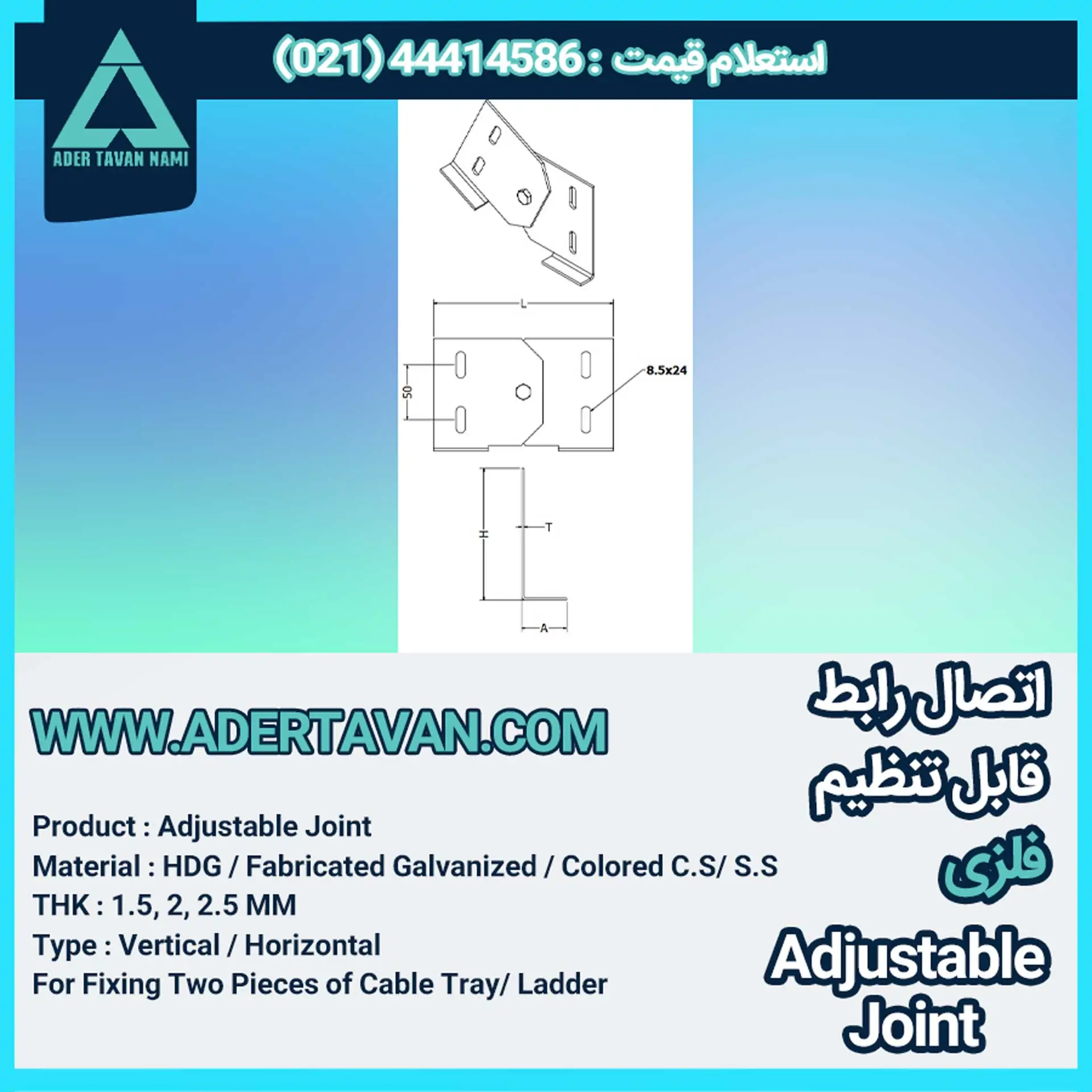
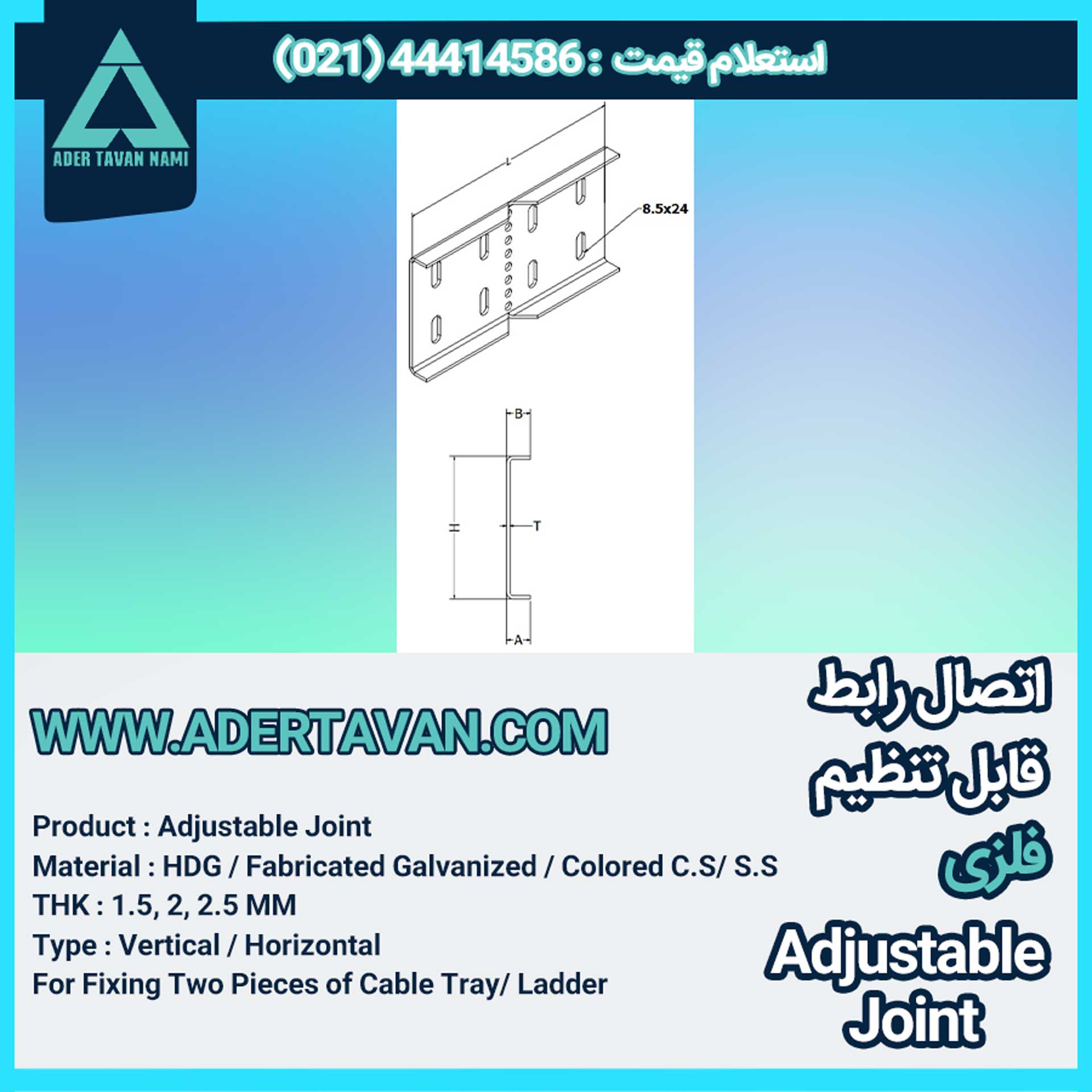
Another type of joint used to connect trays to one another is the adjustable vertical joint (Vertical Joint), which is used in a vertical orientation on cable trays and ladders. The adjustable joint is used to connect two cable trays at customizable angles, adjustable both upward and downward.
These joints come in two forms: the adjustable side joint and the adjustable U-shaped (base) joint. The dimensions of this type of joint are manufactured according to the edge height and thickness of the trays ordered by the client. The thickness of the adjustable joint typically ranges from 1 mm to 2 mm.
4. Adjustable Horizontal Joint for Trays and Ladders
Another type of adjustable joint used to connect trays to one another is the adjustable horizontal joint (Horizontal Joint), which is used in a horizontal orientation on cable trays and ladders. The adjustable horizontal joint is used to connect two cable trays or ladders at customizable angles, adjustable to the left and right. The dimensions of this type of joint are also manufactured according to the cable trays ordered by the client, and its thickness typically ranges from 1 mm to 2 mm.
The main difference between the straight joint and the side joint lies in their cable weight-bearing capacity. If a large number of wires and cables need to be routed inside the tray, the U-shaped joint should be used. For smaller widths and lighter applications such as network and data cabling, the side joint is the appropriate choice.
How the Adjustable Horizontal Side Joint Is Installed
In general, joints must be designed not only to bear the weight of the cables but also to be easy to install, and easy to remove when needed — for example, during repairs or when adding more cables. In addition, these components must be corrosion-resistant, just like the cable trays themselves. Tray joints available on the market are typically designed to match the type of tray ordered by the client. One of the most important factors to consider when designing a tray joint is the raw material and protective coating used in its construction — this factor plays a critical role in the joint’s resistance to corrosion and moisture. In general, joints are made from the same material as cable trays: galvanized sheet metal (hot-dip or cold galvanized).
If you’re planning to equip your site with electrical equipment and don’t have sufficient technical expertise in this area, we recommend contacting our professional consultants at Ader Tavan Nami via the phone numbers listed on our website or through WhatsApp for a free consultation.